« Brooklyn Museum to Get Hit with Atlantic Yards Blowback? | Main | Atlantic Yards Opponents Look With Hope to Gov. Paterson »
March 15, 2008
Building up Brooklyn
Financial Times
By Sharmila Devi
This article tries to give an in-depth overview of the proposed Atlantic Yards development, but doesn't quite get the facts straight.
There seems to be some confusion regarding the Atlantic Yards footprint:
It would cover a vast sunken railyard presently surrounded by low-rise buildings and warehouses near the intersection of three of Brooklyn’s busiest roads – Flatbush, Atlantic and Fourth Avenues.
The Vanderbilt Rail Yard covers only approximately one-third of the footprint.
Then there's this old story about how Brooklyn has fallen since the Dodgers left and has never gotten back up:
There has been a steady decline in Brooklyn’s fortunes that some residents say began 50 years ago when the Dodgers baseball team moved to Los Angeles. By the 1970s, much of Brooklyn was abandoned to muggers and the poor.
The '70s is an odd place from which to do a fast-forward to the 21st Century. It sort of misses how Brooklyn, and specifically, the area in and around the Atlantic Yards footprint, has been steadily improving.
And, here's a claim straight from Forest City about how there's been a compromise in the configuration of the development:
Local opposition has forced the Atlantic Yards plan to be revised several times because of concerns over the height of the buildings, shadow blight and security. There has now been some compromise and the developers seem to agree that the towers should not compete with a nearby landmark, the Williamsburg Savings Bank Tower, a neoclassical skyscraper being converted into condominiums and Brooklyn’s tallest building at 512 feet.
Actually, the size of the development was increased after it was announced in 2004, then later "downsized" back to its original dimensions, though there seems to be a redesign coming for the massive "Miss Brooklyn." No mitigations have been offered for any environmental impacts, and no explanation has ever been offered as to how an arena with a glass façade, set back only 20 feet from a major intersection, can be considered secure.
At least there are some things that are reasonably accurate in the article:
Everyone appears to agree that regeneration of the yards is needed but discord has arisen over the fast-track political approval the project has been given and the public subsidies it is receiving.
Forest City Ratner has started demolishing buildings, clearing the area and moving the railyards to a nearby temporary location but construction has been held up by lawsuits and controversy.
Exact details about funding, subsidies and a state or municipal bond also remain unclear amid the recent financial market turmoil. Forest City Ratner says it is forging ahead.
[Read the full article after the jump.]
THE COMPLETE ARTICLE APPEARS BELOW AND IS BEING PROVIDED FOR RESEARCH AND EDUCATIONAL PURPOSES AS ALLOWED UNDER SECTION 107 OF THE US COPYRIGHT LAW.
Building up Brooklyn
By Sharmila Devi
Published: March 15 2008 00:43 | Last updated: March 15 2008 00:43
Atlantic Yards, a planned $4.2bn development of Frank Gehry-designed apartments, office space and a 20,000-seat sports arena, has all the making of a classic New York tale.
The proposal has pitched developers against residents over what the latter call the very “soul of Brooklyn”.
Local opponents to the scheme have included the actors Steve Buscemi, Rosie Perez and the late Heath Ledger as well as a host of New York writers and personalities. They claim the project is at odds with Brooklyn’s low-rise, brownstone character and fails to provide enough of the low-income housing it heralded. Meanwhile, the developers say it will bring more jobs, housing and urban regeneration.
The city has experienced a real estate renaissance in less than a decade as people have fled Manhattan in search of more space for less cash. But the credit crunch and economic slowdown have begun to impact on its prices.
Overall rises have softened and there are even pockets of decline. For example, the average price of a single-family townhouse in the well-established Park Slope neighbourhood fell 15 per cent to $1.6m last year compared to the previous year, according to the Corcoran Group real estate company. Prices of two-bedroom apartments fell four per cent to $637,000 but values of one-bedroom apartments rose three per cent to $445,000.
By the end of last year more than 50 residential development projects were in the pipeline across Brooklyn but it remains to be seen how they will be affected by the economic downturn.
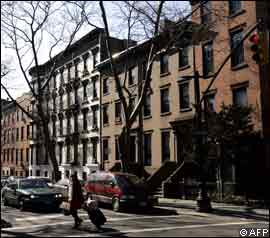
The 22-acre site for the Atlantic Yards project appears unprepossessing although nearby are charming streets that form part of Brooklyn’s “brownstone belt”. And while the borough is vast, with almost two and a half million residents, many believe that the impact of the development, positive or negative, could reverberate beyond its borders.
It would cover a vast sunken railyard presently surrounded by low-rise buildings and warehouses near the intersection of three of Brooklyn’s busiest roads – Flatbush, Atlantic and Fourth Avenues.
Nearby is the Atlantic Terminal, a busy transportation hub where 10 subway lines meet the Long Island Rail Road.
Everyone appears to agree that regeneration of the yards is needed but discord has arisen over the fast-track political approval the project has been given and the public subsidies it is receiving.
Moreover, observers say the grand plan more befits a booming economy than the current state of caution hitting New York’s entrepreneurs and consumers.
But the developer behind Atlantic Yards, Forest City Ratner Companies (led by former city commissioner Bruce Ratner, who inherited his family’s business), and local estate agents are upbeat, saying the area will boom.
Letitia James represents the area on the New York city council and is an opponent of the plan. She says:
“The proposal is totally out of scale with the character of the community. There is an overwhelming need for affordable housing, not an arena that will only bring low-wage jobs. The project is being marketed to people in Manhattan, not Brooklyn.”
There has been a steady decline in Brooklyn’s fortunes that some residents say began 50 years ago when the Dodgers baseball team moved to Los Angeles. By the 1970s, much of Brooklyn was abandoned to muggers and the poor.
Bruce Ratner bought the New Jersey Nets basketball team for $300m three years ago and plans to base the big-league team at the new Atlantic Yards arena by 2010. The developer, who shies away from media interviews, has already invested near the proposed Atlantic Yards, including the Atlantic Center shopping mall, built in 1996.
“Bruce is not a stranger to the neighbourhood or the borough and is unique in that he shied away from Manhattan to be a pioneer in Brooklyn,” says Bruce Bender, a former city council aide who is Ratner’s vice-president for government and public affairs.
He explains the Atlantic mall was criticised when it opened because it was a self-contained box in a neighbourhood of small shops. “I met Bruce at City Hall, where he was trying to distribute a study that showed Brooklyn was bleeding out income to New Jersey because it had no big boxes [malls]. Big retailers wouldn’t come to the area while crime was at an all time high. He was ahead of his time.”
Local opposition has forced the Atlantic Yards plan to be revised several times because of concerns over the height of the buildings, shadow blight and security. There has now been some compromise and the developers seem to agree that the towers should not compete with a nearby landmark, the Williamsburg Savings Bank Tower, a neoclassical skyscraper being converted into condominiums and Brooklyn’s tallest building at 512 feet.
The original Atlantic Yards plan also called for gardens on the roof of the arena. But that would have required fire escapes running outside the entire height of the building. Gehry is back at the drawing board and should have a new roof designed within six months, says Bender.
Forest City Ratner has started demolishing buildings, clearing the area and moving the railyards to a nearby temporary location but construction has been held up by lawsuits and controversy.
Exact details about funding, subsidies and a state or municipal bond also remain unclear amid the recent financial market turmoil. Forest City Ratner says it is forging ahead.
Daniel Goldstein has led the opposition and founded Develop Don’t Destroy Brooklyn (DDDB), a local activist group that includes many celebrities and lesser-known locals.
He refuses to move from his apartment that he bought just before the project was announced and has led the local community lawsuits against Forest City Ratner’s threatened use of eminent domain or compulsory purchase orders.
A majority of several hundred tenants and owners have accepted the developer’s cash buyouts but Goldstein says he and about 50 others are standing firm and plan to take a lawsuit to the Supreme Court after it was recently rejected by a lower court.
Goldstein says gentrification started well before the proposed Atlantic Yards was unveiled. “We have people here who spent their own money doing up their homes when the area was abandoned by the rest of the city and they are very angry,” he says.
Local estate agents say while there has been an upsurge in interest in the area, so far it has failed to push prices up in a weakening property market.
Atlantic Yards, tel +1 866-923 5315; www.atlanticyards.com
Copyright The Financial Times Limited 2008
"FT" and "Financial Times" are trademarks of the Financial Times. Privacy policy | Terms © Copyright The Financial Times Ltd 2008.
Posted by steve at March 15, 2008 1:55 AM