« Rats in the City | Main | Can New York Be Too Successful? »
November 29, 2007
5 Questions: Kent Barwick
Last Exit
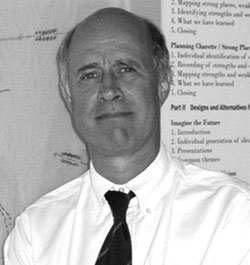 More evidence that Kent Barwick hasn't been paying much attention or just doesn't like Develop Don't Destroy Brooklyn:
You’d mentioned that the Atlantic Yards proposal was one of the wakeup calls that inspired this series. But you’re gotten some heat for not coming out totally against that project. What good do you think can come of it?
There’s the [Develop Don’t Destroy Brooklyn spokesman] Daniel Goldstein school of thought, which seemed to us to be well represented, and they were going to go ahead and do the lawsuit and everything. And there were principles that members of Develop Don’t Destroy shared that we didn’t necessarily share. For instance, we thought that it was a good place for high-density development. You’ve got all the subways there. If Brooklyn wants to have an arena, for whatever combination of emotional and psychological reasons — and it’s true of Brooklyn, the loss of the Dodgers is a defining event for longtime Brooklynites – it’s a good place for an arena. It’s not a great place for a rail yard. The rail yard had divided Brooklyn in two. So, there was a lot to recommend the general direction the project in city planning terms. In detail, it was all over the top.
NoLandGrab: Kent Barwick is either purposely ignoring the work that Develop Don't Destroy Brooklyn has done to promote the UNITY plan — a plan that proposes more density for the railyards — or he just hasn't been paying attention.
There wasn’t anybody playing the role of the government. And so the developer [Bruce Ratner of Forest City Ratner] was allowed to do whatever he thought best. He has a lot more expertise in some areas than others. If you look at Atlantic Center or Metrotech, you can realize that his company is a lot more comfortable in suburban settings that urban settings.
Anyway, we thought the biggest problem with this project was that it was way over the top, it’s overreaching and there wasn’t anybody paying attention to it.
Here Barwick gets to the truth of the matter:
We have ties to Bruce Ratner. He and I were in the Koch Administration together. Several of my trustees were personally friendly with Bruce and members of the Ratner family. We had a number of trustees were former Koch people, and Ratner is a Koch person. So there was a feeling on our part, yeah, everyone likes Frank Gehry as a person. And Laurie Olin was a very fine landscape architect who has done a lot of fine work in the city and elsewhere.
So we weren’t dealing with the usual schlock, let’s-rape-the-site-and-get-out-as-quickly-as-we-can developers, using anonymous architects and landscape architect. There was clearly a greater set of ambitions here. So we set out to analyze what we thought about that. So we went out in doing that and met with community groups to see what they thought in the neighborhood.
We were invited out to the neighborhood by these groups. We were kind of apprehensive because it’s easy to dismiss us as some Upper East Side group, with headquarters on Madison Avenue. You’re always vulnerable to that. So we went out and made this presentation. I was the presenter. It was a really good, thoughtful presentation. We didn’t tell anybody anything. It was kind of a Jane Jacobs thing, even though we didn’t know it. So we said, OK, let’s look at the plan. Let’s look at the parks in Brooklyn and see which ones work and which ones don’t work and why. Let’s look at the streets. We used examples. We went through the whole idea of we need multi-use retail, we need parks to be close to major thoroughfares, and people really responded. And that’s when we came up with the idea to say, let’s set up an alternative voice. Not the pro-Ratner, pro-Marty Markowitz. Not Develop Don’t Destroy. We knew they were going to do what they were going to do. But there seemed to be a need for a third voice. But there are a lot of people uncomfortable with “No, we don’t want anything, no.”
So think it was finally a useful thing to do. We haven’t felt so much heat. Norman Oder, who writes the Atlantic Yards blog, is harsh with us, but he’s supportive. He attends almost all these Jane Jacobs things. So I feel we’ve been fairly treated. I am proud of the work that we did. I’m glad we did it, and I think it will lead to more. I think there’s a growing feeling in Brooklyn that the city by itself is not going to adequately plan. There’s so much change going on that there needs to be a broader context, a broader set of discussions. Most offensive about Atlantic Yards was the failure of the city to do anything, the failure of the state to engage in the communities. The communities were just ignored. It was really offensive.
Posted by lumi at November 29, 2007 4:55 AM